
A Sail Plan (also known as a Trip Plan or Float Plan) should be filed with a responsible person you trust, such as a family member or friend on shore. Completing a Sail Plan and leaving it with them is important because it helps rescuers find you quickly if anything goes wrong on the water.
Your Sail Plan should include:
- Name and number of the pleasure craft
- Craft type (sailboat or powerboat)
- Owner’s name, address and telephone number
- Number of people on board
- Size, type and colour of the craft
- Engine type (outboard or inboard)
- Safety equipment on board
- Trip description,
- planned departure time,
- return time,
- and proposed route.
While boating, make sure to keep your shore contact informed of any changes to your plans throughout the trip. If you’re taking a longer trip that could last for days, we recommend submitting a daily position report to them.
Instruct your family member or friend to contact a regional Rescue Coordination Centre and/or the nearest Search and Rescue (SAR) Team if you do not arrive at your destination as planned.
How to use the Sail Plan
- Download the Sail Plan PDF to your computer.
- Open it in Adobe Acrobat Reader or another PDF reader that supports interactive forms.
- Click the fields to enter your information and select the checkboxes.
- Save your completed form.
- Share it with a responsible person ashore before departure.
- Once you return safely, notify them and close your Sail Plan to prevent unnecessary search and rescue alerts and deployments.
Important: This is a recreated template based on the information in Transport Canada’s Personal Boating Sail Plan Form, not an official Government of Canada form. It does not automatically send your plan to Search and Rescue.

Home safe? Tell your contact right away so no one starts an unnecessary search.
Before you leave it’s also a good idea to check the following items:
- Weather and marine forecast checked
- Mechanical condition of your boat and the fuel level
- Safety equipment is on board and accessible
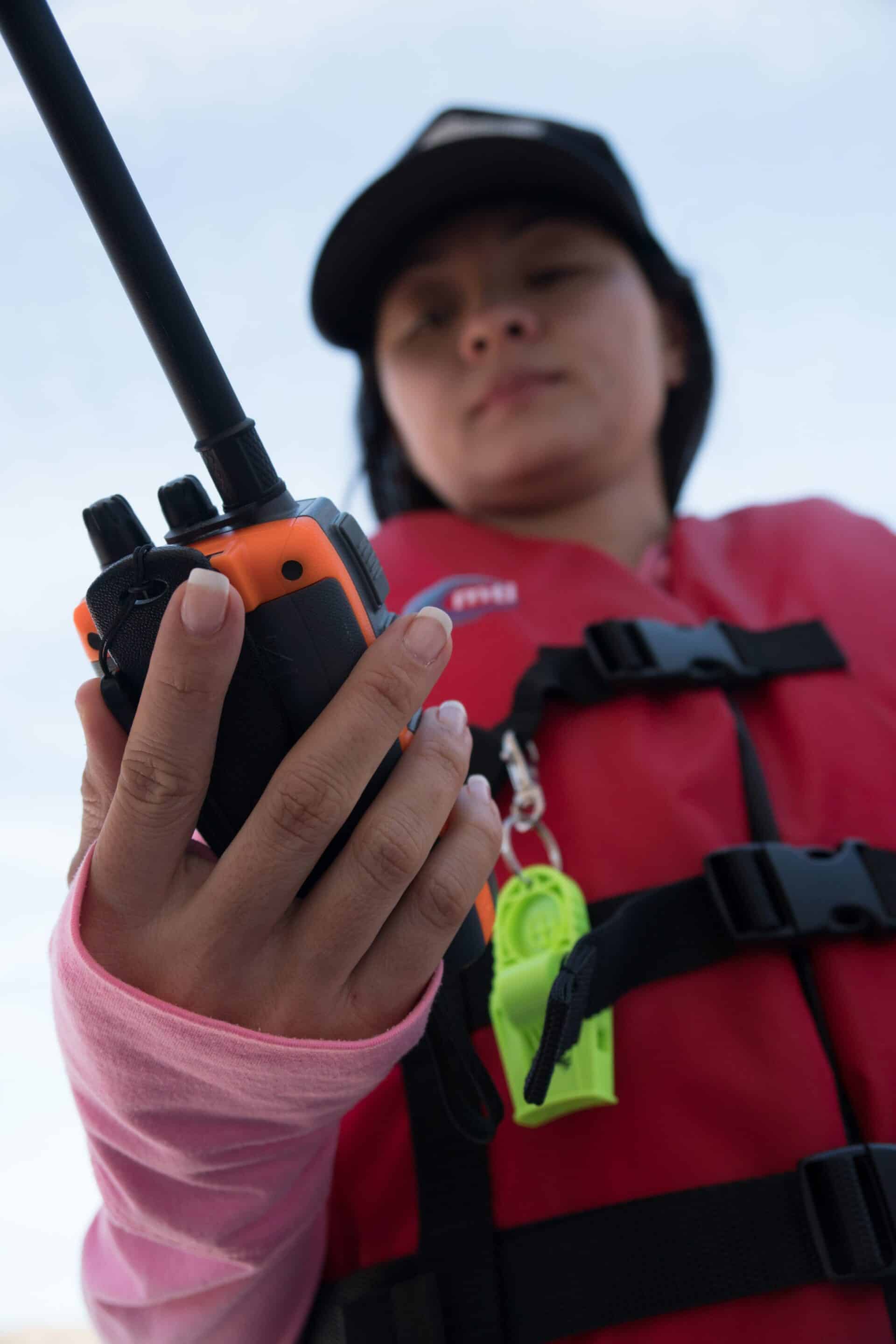
- Check your VHF radio and navigation lights
A few minutes of preparation can make all the difference in an emergency.
Photo credit: NSBC
VHF MARINE RADIO COURSE
Get VHF Radio Certified
If you have a VHF radio on board, certification is legally required. It’s the Law. Not having an Restricted Operator Certificate Maritime (ROC-M) can result in significant fines.
With our in-depth course, you’ll gain the skills to:
- communicate clearly,
- call for help instantly,
- and stay connected on the water.
Whether you’re navigating busy marinas or handling an emergency, knowing the right radio procedures makes all the difference.